
After watching the video and using the drawings included in this article, if you have trouble making a wooden miter saw stand….you probably shouldn’t be using a miter saw. :-) Read the full article…




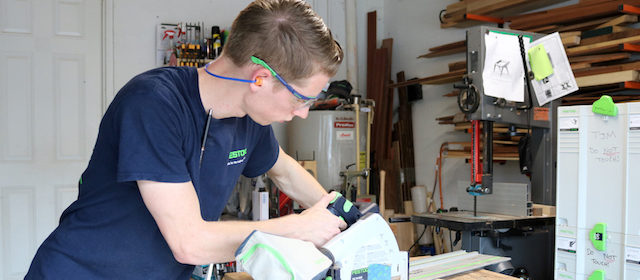

After watching the video and using the drawings included in this article, if you have trouble making a wooden miter saw stand….you probably shouldn’t be using a miter saw. :-) Read the full article…
I am grateful for living at a spectacular time—a moment in human history when technology has dramatically transformed our lives. As a kid, black-and-white television was still new, the NBC color peacock was a few years away, and Disney’s Wide World of Color didn’t premier until 1961—I was old by then, somewhere between nine and ten. Read the full article…
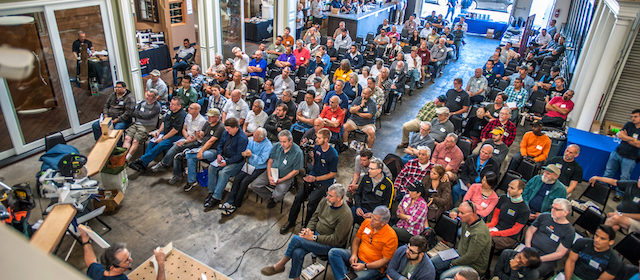
“How did you start the Roadshow?” I can’t count how many times I’ve been asked that question. There are two answers—a long one and a short one. The short one is: hard work, luck, and opportunity. The long answer… Read the full article…
A handsome staircase is always the glory of any home interior. It is also subject to many onerous contemporary code requirements, and requires the highest level of finish carpentry in the house. Planning ahead is all important. Many carpenters and not a few architects have heard me say that the best way to design a house is to design the handrail first, then the rest of the stairs, and then the rest of the house will fall in around it. I’m joking—or at least people laugh at me! But after all, how many of us haven’t faced the miserable puzzle of squeezing a code stair into an inconvenient (or worse) space? So it’s important to design the stair before you build it.
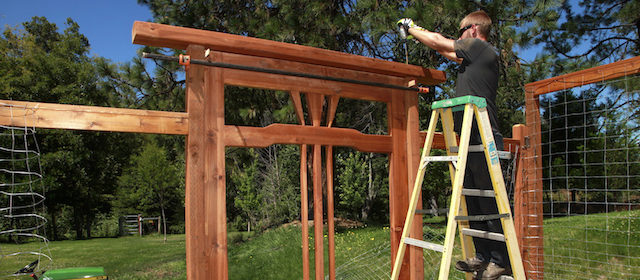
Like every part of my new home in Southern Oregon, I wanted the garden fence and gates to reflect the architectural style I enjoy the most—the craftsman style that I learned to love while living in California, surrounded by bungalows and Greene and Greene homes.
I can’t count how many times I’ve visited the Gamble House in Pasadena and the Thorsen House in Berkeley, among others. Viewing those homes is like eating almonds…you just can’t eat enough of ‘em.
A few years ago, I built the front gates incorporating the same style, mimicking a gate from the Thorsen House. Read the full article…
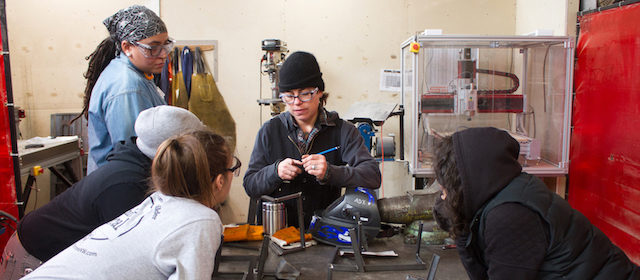
“We have deeply ingrained ideas about what women are qualified to do, or want to do. So many women aren’t even aware of career paths that are available to them. Part of our intention is for women to know, ‘you’re needed, and you’re wanted.’”
Mary Ann Naylor has been working with Oregon Tradeswomen for more than a decade. Her educational background in sociology, political science, and women’s studies makes her a perfect fit as the Communications and Marketing Director of a non-profit organization that challenges the notion that women aren’t allowed or accepted on jobsites or in the trades. Read the full article…
After several meetings, site visits, and of course navigating through circuitous telephone menus, I finally obtained the documentation needed to satisfy all the requirements to get a demolition permit in-hand.
Have you ever wondered how a furniture builder can replicate several pieces that are all exactly the same without the use of any fancy CNC machines? Well fortunately there is a method that won’t break the bank, and can be done in a reasonable amount of time. All it requires is some scrap wood or MDF (your choice), a pencil and straight edge for marking lines, a French curve if you want to get extra fancy, blue tape, CA glue, and a router with two different types of pattern cutting bits—one top bearing and one bottom bearing.
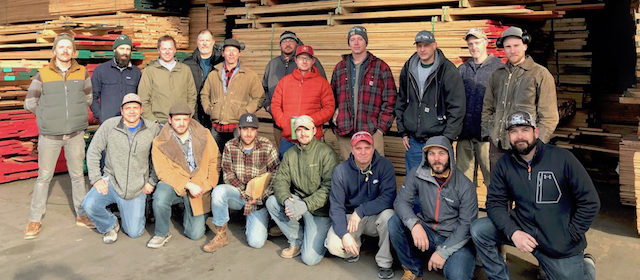
Producing the Katz Roadshow has provided benefits I never imagined. One reward has been the almost electrical experience of meeting carpenters who share the same passion for craftsmanship—which in our business also means a passion for productivity and solid profits; a passion for education and teamwork; a deep distaste for waste, and an eye for almost microscopic detail—all of which can be summed up in a single word: Respect. Since we first began publishing THISisCarpentry, our mission statement has been “Honor Your Craft.” You could just as well put it: Respect Your Craft.
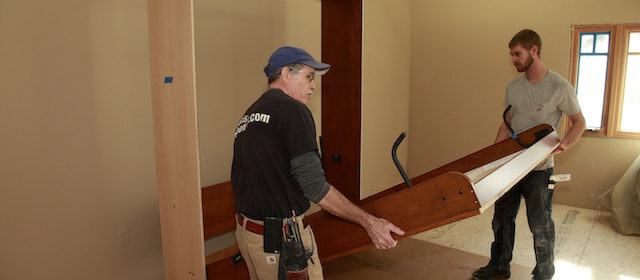
Murphy Beds are incredibly popular, probably because they help us use space more efficiently, and today, with living space at a premium, that’s critical. It sure was for me. I wanted to use the guest cabin I built down by the river as a yoga studio—after all, guests aren’t that common, but yoga is.
If you’re building today you’ve probably succumbed to the demands of the ubiquitous smartphone, being assaulted with job-related texts, emails, and notifications—not to mention Instagrams from Mike Guertin and tips from Gary Katz on THISisCarpentry.
As much as I love technology, it can be a relief to take an afternoon off, and just hold and read a book. This is exactly what I did when my roof framing expert and friend, Will Holladay, emailed me asking if I would review his latest book, “From the Top Plates Up: A Production Roof Framer’s Journey.”
As a kid, Michael wasn’t known as a strong student. He got into trouble a lot, or maybe trouble found him. “My parents weren’t saving for college,” Michael says, “they were saving for bail.”
Michael Haynes grew up on a family farm in a blue-collar rural area of Warwick, Rhode Island. His parents worked hard to make ends meet. Both his father and uncle built their own houses from the ground up. Michael learned how to work hard and how to work with his hands.
When Haynes entered high school, he decided to combine traditional learning with technical studies in construction by attending West Bay Vocational School (WBVS) in Coventry, Rhode Island. Like a lot of tradespeople, Michael discovered he wasn’t a poor student, he simply learned better with his hands than with a chalkboard. In fact, at WBVS, Haynes excelled at learning and soon found a trade that could support his future. Read the full article…
Raise your hand if you have ever cut what you thought was a perfect crown cope only to find out it was open on the top or bottom? I’m raising my hand, too!
There is a great deal of misunderstanding about how copes work: for many carpenters, pressured by the need to ‘get the job done,’ cope joints are mysterious puzzles they haven’t the time or the patience to solve. But if we understand what makes a coped joint work then every cope can fit perfectly on the first try. Read the full article…
Carpentry is more than a job for me, more than just a trade, and more than a profession, too. Carpentry is rooted deep within me, along with my Swedish origin. I know this for a fact because I spend more time appreciating other carpenters’ work, and appreciating architectural ornamentation, than I spend doing anything else in my life—other than installing finish work, of course.
I return to Europe regularly, to visit family—at least that’s the excuse I use, but in truth, the siren of historic architecture lures me. I’ve taken so many photographs of architectural details that I can’t keep track of them. One detail that has always intrigued me is the hunting miter—a curved miter joint used when straight moldings and curved moldings intersect. Read the full article…