

Subscribe to TIC

TIC Merchandise

My New Patio: Stamped Concrete

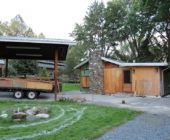
When I bought my little house in southern Oregon, I knew I’d be removing the existing concrete patio and the funky patio cover. The concrete had been mixed in a wheelbarrow and poured in sections, maybe over a decade or two, at least that was the forensic evidence. In some places the finish was smooth as glass, in others there was a heavy broom texture, and in a few sections, no finish at all. It was cracked and heaved. Read the full article…
Installing Exterior Doors in HVHZ Zones

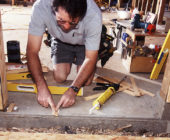
This article might not appeal to all TiC readers, but that’s not the point of THISisCarpentry. Our goal isn’t to reach everyone. Our mission is to provide quality educational material for carpenters, even if it’s only a few of them. Still, I expect that even if you never have to install doors to meet HVHZ code, you’ll learn a few interesting things from this demonstration, things that will probably apply to normal door installation, too. Read the full article…

Rules for Proportion

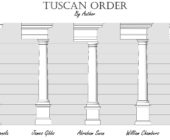
From the Greeks to the Golden Rectangle

Co-authored by Todd Murdock

When it comes to rules of proportion, I never understood the whole picture. At least not until recently, not before spending the last three years studying the classical orders with Todd Murdock—one SketchUp rendition at a time. Now I know why I had such a hard time understanding the rules of proportion. There are none. They don’t exist. But there are guidelines. Read the full article…

The Krenov School of Fine Woodworking

For over twenty years, hundreds of passionate, fine woodworkers enjoyed the unique experience of learning directly from James Krenov, founder of what was then known as the College of the Redwoods, Fine Furniture Program in Fort Bragg, California.

James Krenov trained under Swedish furniture designer, Carl Malmstem. Like Malmstem, Krenov reached out to people through his furniture. He loved the functionality of fine furniture, he marveled at the process of furniture making, and he deeply appreciated how each piece tells a story. As a recognized furniture maker and popular lecturer, Krenov moved from Sweden to Northern California in 1981, where he was invited to develop and direct the Fine Furniture program. Read the full article…

Making Radius Trim On the Jobsite

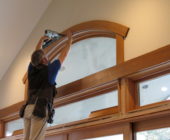
Lately, my crew and I are installing a lot of flat stock casing in the homes that we trim out—which means I also have to make more and more radius casing to finish the tops of windows and doors that have arched heads. Besides the sizes of the openings always being different, some openings require a full semi-circular arch, while others require just a segmental arch. And occasionally we make radius casing that’s stained and top coated with fine finish. That’s when it’s even more important to get a perfect fit and a good grain match, too! Read the full article…

A Side Gate

…with appreciation to the Katz bros.

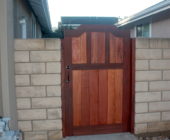
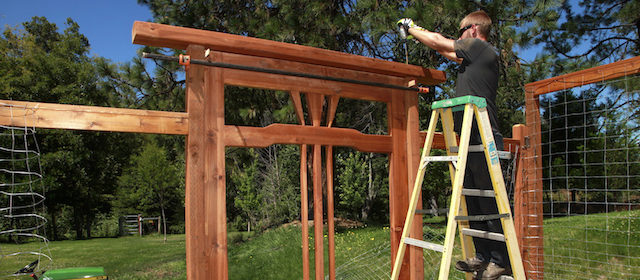
It all started when my wife decided we needed a new gate on the side of the house. The existing gate worked, but being 20 years old, it needed more than just a facelift—it needed a structural lift, too. I’m sure you know what I mean!

Linda found a design on the Internet—an Arts and Crafts gate with a cloud lift for the top rail (you can guess where she found that!). I had never made one before but have faced a lot of tougher challenges in my life. Read the full article…

Woodcarving—Where the Past Meets the Present

I love how people can’t resist jumping to conclusions—as if they can’t live without a firm judgment, a conclusion to every question, no matter what that judgment is.

For instance, people always ask me what I do. I tell them I’m a musician. Honest. And every time I say that, without exception, I’m asked: “Can you make a living at that?”

No, I can’t. Few musicians can. But I make a good living as a woodcarver. And I love my work. When I tell people that, they always respond with shock, as if there’s no connection between music and wood. Read the full article…

Curved Stairs: Part Two

In part one of this article, I explained that if you’ve built a straight stairway or two then you’ve already mastered most of the skills you will need to build a curved stairway. Tasks like setting hardwood treads, installing newel posts, and assembling the handrail parts are all very similar. There are really only a few things about a curved stairway that are unique. First is creating the curved skirt boards, second is making the tapered treads to fit your custom stairway, and finally bending the curved handrail to follow the rise and run of your stairway. There are a few tricks to learn along the way, but I’m certain that once we have walked through it, you’ll realize there’s no mystery—just a little extra work. Read the full article…