Solving a new gable end vent puzzle…without a ladder
Sometimes it’s the little jobs that allow us to flex our ingenuity muscle more than the big jobs. Read the full article…




Sometimes it’s the little jobs that allow us to flex our ingenuity muscle more than the big jobs. Read the full article…

When I started out in the building business, interest rates were low, money was easy to borrow, and custom homes were the way to go. But six years later, in the early 1980s, that all changed. Interest rates went over 15%. No one could afford, let alone qualify, for a loan. Economics and demand dragged us into multi-family housing—we started installing finish work on apartment complexes, condominiums, and townhouses. The work was hard, the prices competitive, but the profits were good if you had your act together, if you were fast and didn’t make mistakes. Read the full article…

Recently, a builder looking for help with a few projects referred a client to me. One of the projects was a mantel with cabinets on either side. They were unsure exactly what they wanted for the mantel, but the cabinet design would be similar to the kitchen cabinets they already had in their home. Read the full article…
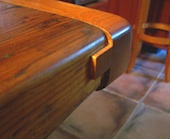
I spent the first 15 years of my working life as a cameraman for—and then producer of—television commercials. In that career, your “film reel” was more important than your resume. It was a collection of a dozen or so of your best TV spots. By the same logic, when I finally switched over to woodworking, and started my own cabinet shop, I found that I would land more jobs when I could show a potential client photographs of our work. Over time, I carried an increasingly larger photo album in my attaché. Read the full article…
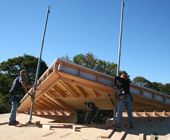
I spent many years framing custom homes with a big crew of expensive carpenters, and the pressures of keeping things moving and making payroll taught me to be efficient. Now, I’ve downsized, and my wife and I are enjoying framing houses with no outside help. Getting things done with just two of us working—and saving our aging backs—makes good use of the lessons I’ve learned about fast, efficient framing techniques. Read the full article…
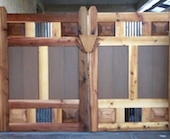
Between 1980 and 1994 I moved ten times—one fixer after the other, and a few rentals, too (fixers aren’t always profitable, even for a carpenter). When I moved into my current home, I promised myself I’d stay a while, and one of the first projects I wanted to tackle was replacing the gates. I accomplished the first goal, but it took a while before I got to the gates. Read the full article…
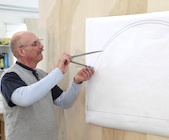
I was working on a remodel—a high-end home near the Hamptons—when the homeowner came out the front door with a magazine in her hand. “Look!” she said. “This is exactly what I want on top of my front door!” She tilted the picture toward me: a handsome Greek Revival portico decorated with an elliptical sunburst. “It’s going to cost you,” I told her. “How much?” she asked. “About $1,200,” I said. She smiled and said, “Do it.” Read the full article…
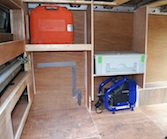
Van racking is basically just trim carpentry with loads of scribes, using elements of North American face frame construction and European box systems of cabinet making. But it’s also an exercise in extreme organization. Getting it right can save you time and energy on the jobsite—both of which lead to increased productivity and profits. Read the full article…
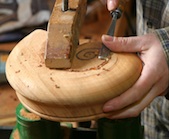
When you walk into a custom home, an old Victorian or an old Colonial, one of the first and most impressive sights is the stair. There it is in the great room. Graceful. Elegant. It is often the biggest piece of furniture in a home and one of the most valuable ornamental assets.
Or is it? Read the full article…
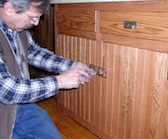
I’m more of a carpenter than a cabinet maker. I do mostly trim and cabinet installations now, and use my cabinet making knowledge on rare occasions—mostly to alter existing cabinets, as opposed to making new ones from scratch. For the few new cabinets that I do make, I use the latest technology. For example, I use pocket screws to assemble face frames, and SenClamps (Senco corrugated fasteners) to fasten cabinet sides to the frames—eliminating the clamping and drying time saves so much time when you’re making cabinets. Read the full article…

About ten years ago, I was between shops when I got a call from a historic church in Half Moon Bay that had some woodwork in need of replacing. It was an hour and a half away, so I asked them to send me a photo. After all, why drive that far unless I knew it was a worthwhile job? When I saw the photo they sent me, I knew I had to do it! Read the full article…
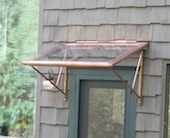
A copper rooflet isn’t made of wood, so what’s it doing in THISisCarpentry? Well, working with copper requires a lot of the skills that we use every day working with wood. In this project, the rooflet is meant to “look” like wood, and it serves a purpose that is generally filled by wood. Sure, I use some skills that are not technically considered “carpentry,” but if you’ve ever sweated a pipe-fitting, or made a pan-flashing for a window or door, or flashed a cricket, valley, or chimney, you’ve got the skills. So, brush off that dusty skill set, use your imagination, and apply it to a project that just might be screaming COPPER! Read the full article…
A little while ago, a customer called wanting to do something in their living room to make it feel more formal, a bit “French country.” The homeowner presented me with pictures of rooms from design magazines. “Can you make my living room look like this?”
Sure I can! Read the full article…
Like many carpenters, I’m always looking for an interesting challenge. I like tackling something I’ve never done before—and succeeding. Not only is it satisfying to push yourself, but a satisfied customer means good word-of-mouth, which (hopefully) leads to more work. Win-win. This is exactly what happened when one of my best clients approached me with an interesting project. Read the full article…